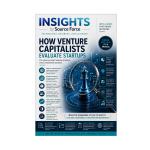
How Venture Capital Really Makes Decisions
Inside the Evaluation Systems That Determine Which Startups Get Funded and Which Don’t
By Insights by Source Force Editorial Desk
Executive Lens
Venture capital is not driven by intuition it is governed by structured judgment under uncertainty.
Every investment decision is a calculated bet on future market dominance. Behind each funded startup lies a rigorous evaluation architecture designed to answer a single, non-negotiable question:
Can this company deliver asymmetric returns at scale?
Understanding this framework is not optional for founders it is fundamental.
The Evaluation Mindset: What VCs Are Actually Looking For
Venture capital firms do not invest in ideas. They invest in repeatable, scalable, and defensible systems of growth.
The modern VC lens has evolved beyond storytelling. Today’s investors prioritize:
- Measurable traction over vision alone
- Execution capability over theoretical potential
- Market timing over product novelty
The shift is clear: evidence now outweighs narrative.
The Five Pillars of Investment Decision-Making
Rather than a checklist, venture capital evaluation operates as an integrated system of signals:
1. Market Gravity
The first filter is always the market.
Investors assess whether the opportunity is large enough to justify venture-scale returns. This includes:
- Total addressable market expansion potential
- Structural demand drivers
- Speed of market adoption
A small market, regardless of execution, limits outcome potential.
2. Economic Engine
A startup must demonstrate how it converts growth into revenue.
Key focus areas:
- Revenue architecture (SaaS, marketplace, transactional)
- Unit economics sustainability
- Scalability of margins over time
Profitability may be delayed but economic logic cannot be absent.
3. Product Leverage
The product is evaluated not just as a solution but as a competitive advantage.
Investors look for:
- Differentiation that is difficult to replicate
- Technology depth or proprietary systems
- Early indicators of product-market alignment
In software-led ventures, intellectual property becomes a core valuation driver.
4. Founder Signal
At early stages, the team often outweighs everything else.
Evaluation criteria include:
- Founder-market fit
- Execution velocity
- Decision-making under pressure
A strong team can navigate uncertainty. A weak team amplifies it.
5. Traction Proof
Data validates assumptions.
Even minimal traction can significantly shift investor confidence when it demonstrates:
- Consistent user or revenue growth
- Retention strength
- Early monetization signals
In today’s environment, traction is the new credibility.
Competition Is Not a Threat It’s Validation
Contrary to common belief, the absence of competitors raises concern.
Venture capital firms analyze:
- Market saturation vs. whitespace opportunity
- Competitive positioning
- Barriers to entry
A competitive landscape signals demand. The real question becomes:
Why will this company win?
Exit Thinking: The Invisible Driver
Every VC decision is anchored in exit potential.
Investments are evaluated based on:
- Likelihood of acquisition by strategic players
- IPO viability within a defined timeframe
- Industry consolidation patterns
Without a credible path to liquidity, even strong startups fail to secure capital.
Due Diligence: Where Narratives Are Tested
Once interest is established, assumptions are systematically validated.
Financial Integrity
Revenue quality, burn rate, and forecasting discipline are scrutinized.
Legal Structure
Ownership clarity, contracts, and compliance frameworks are verified.
Technical Depth
For technology startups, investors assess scalability, architecture, and security resilience.
Commercial Reality
Market claims are tested through customer validation and pipeline analysis.
Team Verification
Background checks and organizational structure are evaluated for execution risk.
Due diligence is not procedural it is risk compression.
The Role of Intellectual Property in Modern VC
In digital businesses, intellectual property has shifted from a supporting asset to a central value driver.
Investors increasingly assess:
- Ownership and control of core technology
- Uniqueness of algorithms or architecture
- Long-term defensibility of the product
In many cases, the codebase itself is the company’s most valuable asset.
Industry-Specific Evaluation Dynamics
Venture capital does not apply a uniform lens across sectors:
- Software & AI - Scalability, recurring revenue, and system architecture
- Fintech - Regulatory compliance and transaction integrity
- Healthcare - Validation cycles and approval pathways
- Marketplaces - Unit economics and liquidity balance
Each sector introduces its own risk model and its own definition of success.
Preparation: The Hidden Differentiator
Most startups fail not because they are unworthy but because they are unprepared.
Investment readiness requires:
- Structured data environments (data rooms)
- Clear financial narratives
- Evidence of product-market alignment
- Legal and ownership clarity
Fundraising is not an event it is the result of disciplined preparation.
Where Founders Go Wrong
Patterns of failure are consistent across markets:
- Inflated valuations without supporting data
- Weak financial discipline
- Lack of defensibility
- Premature fundraising attempts
- Over-reliance on storytelling
In today’s market, precision replaces persuasion.
Global Shifts in VC Evaluation
The venture landscape is undergoing measurable transformation:
Capital Efficiency Over Growth-at-All-Costs
Sustainable economics are now prioritized over rapid expansion.
AI-Centric Investment Focus
Artificial intelligence continues to attract disproportionate capital allocation.
Cross-Border Capital Flows
Investment is no longer geographically constrained global readiness is essential.
Deeper Due Diligence Standards
Technical and financial scrutiny has intensified across all stages.
Source Force Insight
At Insights by Source Force, our analysis indicates a structural evolution in venture capital decision-making:
The future of startup funding will be defined by verifiability where data, defensibility, and disciplined execution outweigh narrative-driven growth.
Capital is becoming more selective, not scarce.
The Investment Equation
At its simplest, venture capital decisions converge on four variables:
Market + Team + Traction + Scalability
When these align, capital follows.
Conclusion: Funding Is Earned, Not Raised
Venture capital is not about convincing investors it is about de-risking their decision.
Startups that succeed in fundraising do not just present opportunities. They demonstrate inevitability.
Final Reflection
In a market saturated with ideas, capital flows not to the loudest voices but to the clearest signals.
Disclaimer
This article is intended for informational and editorial purposes only and does not constitute financial, legal, or investment advice. Venture capital involves significant risk, and outcomes may vary based on market conditions, geography, and execution. Readers are advised to consult qualified professionals before making investment or business decisions.